
Key Questions
- A Blow to US Leadership
- The Gap Narrowed Faster Than Predicted
- The Price Picture: Who Charges What for Tokens
- Questions and Answers
- Instead of an Epilogue: Who Copied Whom
A Blow to US Leadership
Last week, the balance of power in artificial intelligence shifted noticeably. Axios noted that a new Chinese model essentially narrowed the gap with the American leaders — and offered to do so at a significantly lower price.
The model in question is Kimi K3, a large AI model from the Beijing-based company Moonshot AI. Its release on Thursday caught developers off guard and caused quite a stir in Silicon Valley. Almost instantly, the model ranked among the best in the world: according to the AI Evaluator Arena platform, Kimi K3 outperformed Anthropic’s Fable 5 and OpenAI’s GPT-5.6 in coding tests. In the overall text model rankings, it surpassed Anthropic’s previous flagship, Opus 4.8, while being priced about 40% lower.
An important detail for the market: On July 27, 2026, Moonshot plans to release Kimi K3 as an open-source model. This means companies and government agencies will be able to fine-tune it and deploy it on their own infrastructure — something strictly prohibited with the closed premium models from American labs.
The Gap Narrowed Faster Than Predicted
Not long ago, the US believed that Chinese developments were 6–12 months behind their American counterparts. In April 2026, the US government AI testing center estimated the lag of the newest DeepSeek model at about eight months.
The arrival of Kimi K3 showed that these estimates were overly optimistic. AI analyst Kim Isenberg described the situation as cause for a “code red” in parts of the industry.
Axios emphasized: Kimi doesn’t have to be the absolute best model in the world to change the market. For companies and governments, a solution that delivers near-cutting-edge results, costs 40% less, and can be hosted on proprietary servers is often more attractive than a closed premium alternative. The mere existence of such a model pressures the pricing policies of American labs, their market valuations built on technological superiority, and the justification for multi-billion-dollar investments in data centers.
The official reaction followed swiftly: CIA Director John Ratcliffe publicly stated that China’s technological edge over the US will become a serious problem and that the US cannot let it happen.
The situation is exacerbated by macroeconomic forecasts. Chinese professor Xueqin has predicted a global economic collapse in 2027, pointing to two major bubbles in the US: private credit and AI. According to him: “The artificial intelligence bubble is entirely fueled by foreign liquidity, primarily from Japan and the Gulf states. In a year, you will face mass unemployment, a stock market crash, corporate bankruptcies, and energy crises. I think this will be the main theme of 2027.”
The Price Picture: Who Charges What for Tokens
Along with the release of Kimi K3, the overall pricing landscape for top models — both Chinese and American — has been updated.
Main Models (Price per 1M tokens)
| Model | Input | Output | Notes |
|---|---|---|---|
| GLM-5.2 (Zhipu AI) | $1.40 | $4.40 | cheaper via aggregators (~$0.92–0.95 / $2.90–3.00) |
| GPT-5.6 Luna | $1.00 | $6.00 | the entry-level version of the OpenAI lineup |
| GPT-5.6 Terra | $2.50 | $15.00 | standard balance of price/performance |
| GPT-5.6 Sol | $5.00 | $30.00 | flagship for complex reasoning and agents |
| Kimi K3 | $3.00 (cache-miss) / $0.30 (cache-hit) | $15.00 | 1M token context |
For comparison: Kimi K3 is slightly more expensive than GPT-5.6 Terra for input tokens without caching, but with active caching, it can actually be cheaper in practice.
Chinese Alternatives at the GPT-5.6 Terra Level
As of July 2026, a wide range of Chinese models are competing with American flagships:
- GLM-5.2 (Zhipu AI) — $1.4/$4.4, strong in coding and long context (1M tokens), close to Terra.
- DeepSeek V4 (Pro/Flash) — one of the cheapest options, often on par with or better than Terra in coding and math.
- Qwen 3.7 Max (Alibaba) — multi-lingual support, coding, image processing.
- Kimi K2.6/K2.7 — earlier and cheaper versions from the Moonshot lineup (~$0.95/$4), strong in agentic scenarios.
- MiniMax M3 — one of the leaders among open models on SWE-Bench.
Also noteworthy are Tencent Hunyuan (Hy3), Baidu ERNIE, and ByteDance Doubao — each occupying its own niche: from enterprise tasks to raw speed and low cost.
General strengths of Chinese models: prices 3 to 10 times lower than US flagships, open weights (often MIT/Apache, allowing local deployment), and context windows that frequently reach 1M tokens.
Conclusion
Kimi K3 is not just another model in the stream of releases. It is a signal that the reliance on technological superiority to justify premium pricing and colossal investments in US data centers is becoming increasingly vulnerable. The gap, estimated at 6–12 months in April 2026, has proven to be much smaller in practice — and continues to shrink faster than official forecasts anticipated.
Questions and Answers
- What is Kimi K3 and who developed it?
- Why was its release described as a turning point?
- Which models did it surpass, and in what specific areas?
- When and in what format will Kimi K3 become available to a broader audience?
- How much earlier than expected did China narrow the gap in AI?
- How did US officials react to this?
- How much does Kimi K3 cost compared to American models?
- What other Chinese models are competing with flagships like GPT-5.6 Terra?
- What are the main advantages of Chinese models over closed American models?
- What broader implications could this have for the AI market?
Quality and Reliability
- How does Kimi K3 perform beyond the narrow metric of Arena coding tests — on math, long-context retrieval, multi-turn reasoning, and following constraints in instructions?
- What is the hallucination rate, and how reliable is the model’s tool-use/agentic mode in real-world scenarios rather than lab tests?
- How well does the claimed 1M-token context actually work in practice without degrading after 200–300k tokens?
Legal and Regulatory Questions
- Under what exact license terms will the open-source release take place on July 27 — MIT, Apache, or a custom license with restrictions like DeepSeek’s?
- How might US export restrictions impact the use of Kimi K3 by companies with US contracts — considering the history of Fable 5/Mythos 5?
- To what extent does Kimi K3 filter responses on sensitive topics for the PRC, and how will this affect the use of the model outside of China?
Infrastructure and Privacy
- Where is the Kimi K3 API physically hosted, and where does data go during a cache hit/miss — how critical is this for GDPR and corporate requirements?
- What minimum resources (GPU/VRAM) are needed to deploy the model locally once its weights are released?
- How stable is the Kimi K3 API — rate limits, SLAs, downtime history?
Economics for Developers
- What are the real savings considering the cache-hit rate in typical workflows, and how much does it depend on the usage pattern?
- How much does fine-tuning and running the model in production cost beyond the base API prices?
- How high is the risk of vendor lock-in when migrating between Kimi, GLM, DeepSeek, and GPT due to differences in tool-calling formats and behavior?
Answers
1. What is Kimi K3 and who developed it?
It is a large artificial intelligence model from the Beijing-based company Moonshot AI, released on Thursday and instantly ranked among the best models in the world.
2. Why was its release described as a turning point?
It caught developers off guard and stirred up Silicon Valley, delivering results comparable to American flagships but at a significantly lower price. Axios explicitly stated this was the moment China effectively “wiped out” the US lead in AI.
3. Which models did it surpass, and in what specific areas?
According to the AI Evaluator Arena, Kimi K3 surpassed Anthropic’s Fable 5 and OpenAI’s GPT-5.6 in coding tests. In the overall ranking of text models, it beat Anthropic’s former flagship, Opus 4.8, while costing roughly 40% less.
4. When and in what format will Kimi K3 become available to a broader audience?
On July 27, 2026, Moonshot plans to release Kimi K3 as an open-source model. This will allow companies and governments to fine-tune it and run it on their own systems.
5. How much earlier than expected did China narrow the gap in AI?
In April 2026, the US government’s AI Testing Center estimated the gap for the latest DeepSeek model to be about eight months, with the general consensus being a 6–12 month gap. The emergence of Kimi K3 showed that the real gap had shrunk much faster than those forecasts.
6. How did US officials react to this?
CIA Director John Ratcliffe publicly stated that China’s technological edge over the US would become a serious problem and must not be allowed to happen.
7. How much does Kimi K3 cost compared to American models?
Its API is priced at $3.00 per 1M input tokens on a cache miss (and just $0.30 on a cache hit) and $15.00 per 1M output tokens. This makes it slightly more expensive than GPT-5.6 Terra ($2.5/$15) for uncached input, but in practice, with active caching, it can end up being cheaper.
8. What other Chinese models are competing with flagships like GPT-5.6 Terra?
Key contenders include GLM-5.2 (Zhipu AI), DeepSeek V4 (Pro/Flash), Qwen 3.7 Max (Alibaba), earlier Kimi versions like K2.6/K2.7, MiniMax M3, Tencent Hunyuan, Baidu ERNIE, and ByteDance Doubao.
9. What are the main advantages of Chinese models over closed American models?
Prices that are 3–10 times cheaper, open weights (often under MIT/Apache licenses, enabling local deployment), and context windows that frequently reach up to 1M tokens.
10. What broader implications could this have for the AI market?
The mere existence of a competitive and cheap alternative puts pressure on the pricing policies of American labs, their market valuations anchored in technical superiority, and the justification for multi-billion-dollar investments in data centers.
11. How does Kimi K3 perform beyond the narrow metric of Arena coding tests?
There is data beyond just one metric. On the aggregated Artificial Analysis Intelligence Index, the model scored 57 points, placing it fourth among 189 models — on par with Claude Opus 4.8 and GPT-5.5, trailing only Claude Fable 5 and GPT-5.6 Sol. According to Moonshot’s own figures, K3 scores 81.2 on FrontierSWE and 88.3 on Terminal-Bench 2.0. An independent breakdown by Simon Willison confirms this: the model generally beats Claude Opus 4.8 max and GPT-5.5 high but falls short of Claude Fable 5 and GPT-5.6 Sol. So, it is a strong model, but not the absolute best in the world. However, an independent audit focused specifically on math, long-context retrieval, and multi-turn reasoning has not yet been published as of the model’s release; mid-July publications mostly rely on Moonshot’s self-reported figures.
12. What is the hallucination rate, and how reliable is the tool-use/agentic mode in real-world scenarios?
There is no direct data for K3 yet, but there is a red flag concerning the class of Chinese models as a whole: a May study by Booz Allen Hamilton documented obfuscated vulnerabilities in generated code and behavioral patterns that shift depending on the assigned persona—behaviors that standard benchmarks (which use neutral personas) fail to capture. The researchers themselves admit there isn’t enough data yet to confirm whether this is an artifact of the training data, intentional engineering, or statistical noise in a small sample. A similar, standalone audit for K3 has not yet been conducted.
13. How well does the claimed 1M-token context actually work in practice?
Technically, K3 is built on a new architecture called Kimi Delta Attention—hybrid linear attention that Moonshot claims offers up to a 6.3x decoding speedup on million-token contexts. However, this is a speed claim, not a claim about content retention quality in long contexts. Independent verification of degradation is technically impossible right now: Moonshot has not disclosed the number of layers, KV heads, or head dimension, so no one can accurately calculate memory requirements to run an independent maximum-context quality degradation test.
14. Under what exact license terms will the open-source release take place on July 27?
The answer here is concrete: the full weights of the model are scheduled to be released on Hugging Face by July 27, 2026, under a modified MIT license. Unlike vanilla MIT—similar to DeepSeek, there are custom modifications—but it is also not a strictly closed bespoke license. It aligns with the precedent set by prior releases in the K2 series.
15. How might US export restrictions impact the use of Kimi K3 by companies with US contracts?
This is a very hot topic right now. After the US imposed export restrictions on Anthropic’s Fable 5 and Mythos 5 in June 2026, the share of Chinese models in token traffic for US companies on OpenRouter surged from an average of 11% to over 30%, peaking at 46%. The Chinese side has reacted symmetrically: on July 7, Reuters reported that PRC authorities met with Alibaba, ByteDance, and Z.ai to restrict foreign access to the most advanced Chinese models, including unreleased and open-weight models. Analysts note a paradox: harsh restrictions without public criteria and exemptions for allies will likely push for even greater adoption of Chinese models. Since they are often released as open weights, a provider cannot revoke access retroactively once the model is downloaded.
16. To what extent does Kimi K3 filter responses on sensitive topics for the PRC?
Direct data on filtering specifics for K3 is missing—the model is too fresh for such an audit. However, the systemic legal context remains: Chinese AI companies are subject to the national intelligence law, requiring them to “support, assist, and cooperate” with state intelligence activities. Calling a China-hosted API intrinsically submits user data to Chinese jurisdiction—regardless of what answers the model actually generates.
17. Where is the Kimi K3 API physically hosted, and where does data go during a cache hit/miss?
There is no direct answer regarding Moonshot’s specific server placements. However, risk modeling points to a clear practical conclusion: risk to data is defined by the deployment method, not by who trained the weights. Self-hosted open-weight models send nothing back to the developer, whereas calling an API hosted in China places the data under Chinese jurisdiction. For GDPR and corporate requirements, the practical takeaway is clear: if privacy is critical, self-hosting is required instead of direct calls to the Moonshot API.
18. What minimum resources (GPU/VRAM) are needed to deploy the model locally once its weights are released?
We have some estimates here, even before the weights are out. In the native MXFP4 format (~4.25 bits per parameter), 2.8 trillion parameters equate to roughly 1.5 TB just for the weights. Moonshot’s deployment documentation references “supernode configurations with 64 or more accelerators.” Independent assessments back up this scale: a realistic minimum is a multi-GPU workstation or server with >1 TB of RAM for CPU inference, and even a 512 GB Mac Studio falls short of a viable setup. By comparison, the previous 1T parameter model already required around 2308 GB of VRAM at FP16—exceeding what an 8-GPU node could handle. Running this locally on consumer hardware is entirely out of the question; we are talking about server racks, not workstations.
19. How stable is the Kimi K3 API — rate limits, SLAs, downtime history?
There is no separate track record for downtime yet—the model launched on July 16, so it’s too new for a meaningful reliability history. The launch was API-first: the model is available via kimi.com, mobile apps, Kimi Work, Kimi Code, and API under the kimi-k3 identifier. It has also already appeared on third-party routers like OpenRouter and OrcaRouter, providing some fault tolerance through alternative providers, though this does not replace official SLA statistics.
20. What are the real savings considering the cache-hit rate in typical workflows?
The official rate is $3 per 1M input tokens, but on a cache hit, it drops to just $0.30. Mooncake-serving reportedly maintains a cache-hit rate above 90% for coding tasks, which inherently cuts real-world input costs roughly 4-fold. For typical agentic/coding scenarios involving repeating context (the primary use case), the real economics are much closer to $0.30 than $3—but this is specific to high-repetition coding workflows, not all potential scenarios.
21. How much does fine-tuning and running the model in production cost beyond the base API prices?
There are no figures directly mapped for K3, but a baseline exists from the previous generation: LoRA fine-tuning adds about 50% to the inference memory footprint, while full fine-tuning—requiring gradients and optimizer states—needs roughly 4x the inference memory, frequently meaning multiple GPUs. Broad economic conclusion: self-hosting justifies itself under three conditions: strict data residency requirements, fine-tuning on proprietary data, or a volume scale where in-house hardware is genuinely cheaper than managed endpoints. Without meeting one of those conditions, using APIs makes more sense.
22. How high is the risk of vendor lock-in when migrating between Kimi, GLM, DeepSeek, and GPT?
There are no direct data comparisons on tool-calling format compatibility among these models yet. An indirect signal favoring low lock-in is that K3 immediately launched via Moonshot’s OpenAI-compatible platform and third-party routers, which usually eases switching between providers. In practice, behavioral differences persist—for example, K3 streams reasoning traces in a separate reasoning_content field—so migrating between models will still require prompt and agentic logic adaptations.
Instead of an Epilogue: Who Copied Whom
I read a speech by an American politician, tied to yet another “DeepSeek moment”—in this case, the release of Kimi K3. The gist of the speech: “You’ve got to understand, they stole everything from us and copied us, period. They can’t create anything on their own.”
So I went and looked up the bios of the founders of Kimi AI Lab, a.k.a. Moonshot AI, and, would you look at that:
— Founder & CEO Yang Zhilin studied computer science at Tsinghua University, then earned his PhD at Carnegie Mellon University. He was the first author of Transformer-XL and XLNet. Previously worked at FAIR and Google Brain.
— Co-founder & CTO Zhang Yutao earned his PhD in computer science at Tsinghua University. His early work focused on knowledge graphs and AMiner. He previously co-founded Recurrent AI alongside Yang.
— Co-founder Wu Yuxin studied at Tsinghua University and Carnegie Mellon University before joining FAIR. He worked with Kaiming He on Group Normalization and created Detectron2.
— Co-founder Zhou Xinyu studied computer science at Tsinghua University, then joined Megvii, where he focused on turning research algorithms into production systems. Co-author of ShuffleNet.
A STEM PhD from Tsinghua, a government talent grant to cover tuition at Carnegie Mellon—total nonsense, obviously. What could they possibly be capable of? For reference: the competition rate for this track at Tsinghua this year was 280 applicants per spot.
Meanwhile, the American politician delivering the speech is, as expected, a trader of something derivative. At least he’s not a wrestling promoter, a former croupier, or a talk-show host—that would be absolute hell.
But even this isn’t bad. So, to sum up the scene: a textile trade school graduate is explaining that a group of honors graduates from a top-tier physics-and-tech program couldn’t possibly have come up with anything on their own—they clearly copied it all from him.
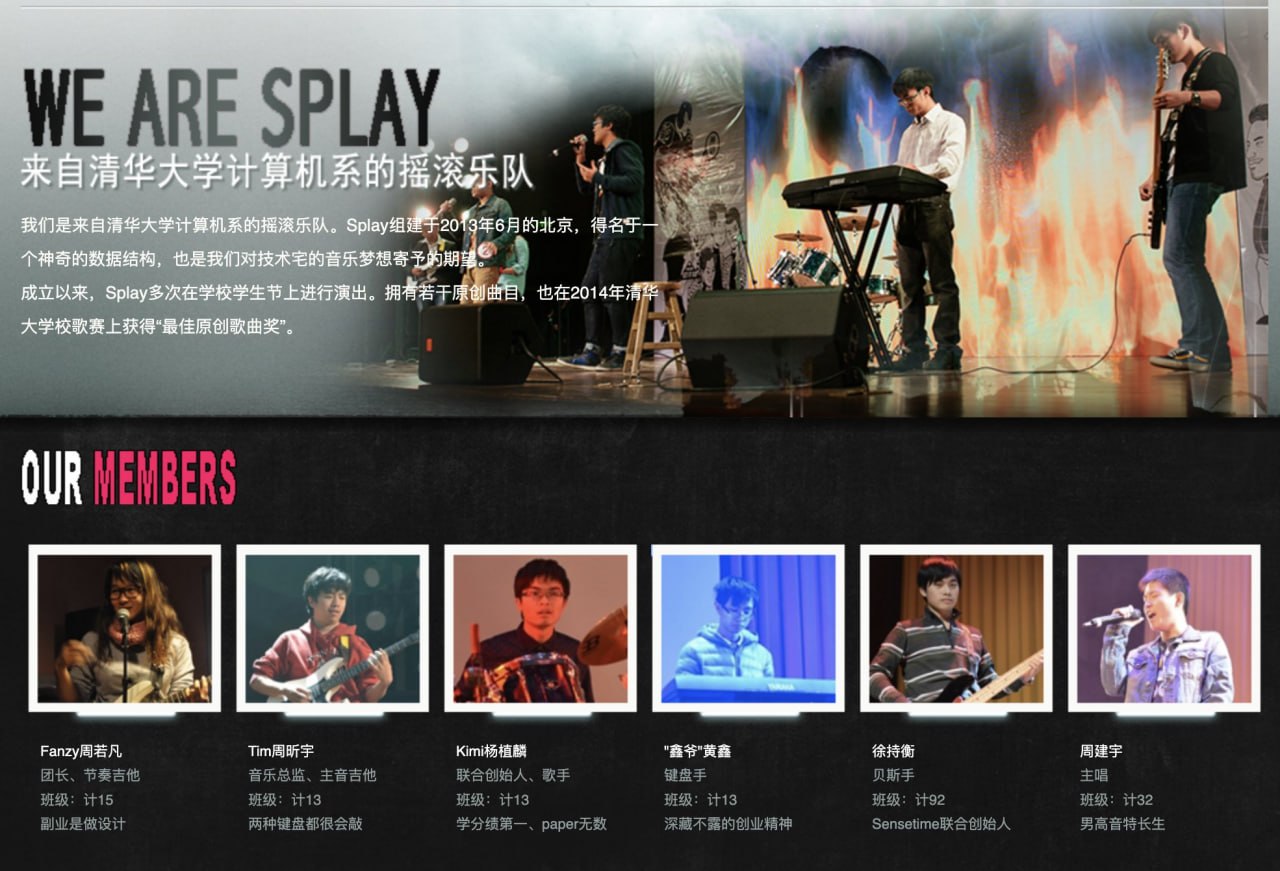
By the way, they named it Moonshot AI because they played Pink Floyd covers. The attached photo shows two of the four company founders.
All in all, decent competition on the scientific front. Meanwhile, Elon Musk fled the presser as SpaceX shares tanked below their IPO price.